History
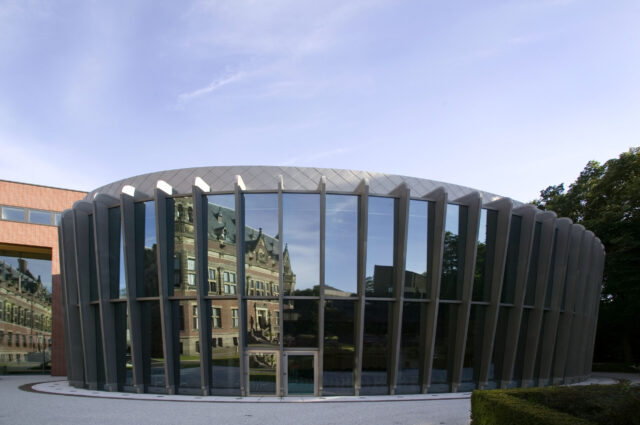
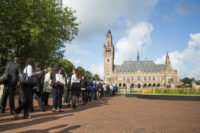
Since its creation in 1923 with funding received from the Carnegie Foundation in Washington, The Hague Academy of International Law has occupied premises at the Peace Palace, alongside the highest judicial institutions such as the International Court of Justice and the Bureau of the Permanent Court of Arbitration. It is a centre for research and teaching in public and private international law, with the aim of further scientific and advanced studies of the legal aspects of international relations. This mission, which its founders attributed to it in line with the "peace through law" movement, has remained entirely relevant to the present day. In fulfilling its mission, the Academy has succeeded in both preserving its traditions derived from the Hague Peace Conferences of 1899 and 1907 and adapting itself to the most recent needs of a world undergoing profound change.
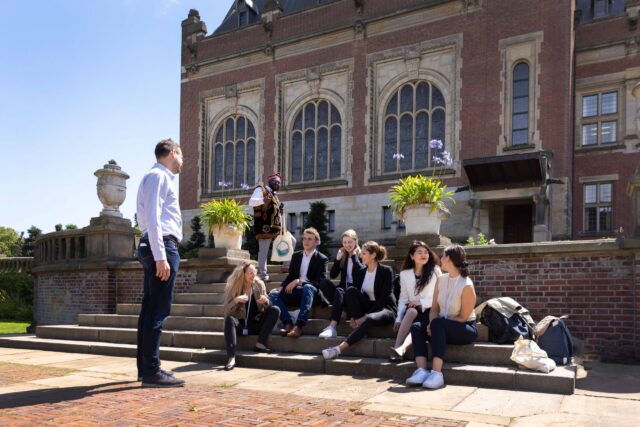
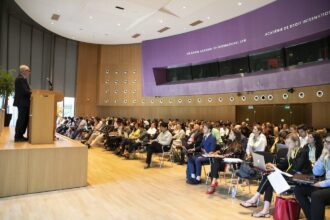
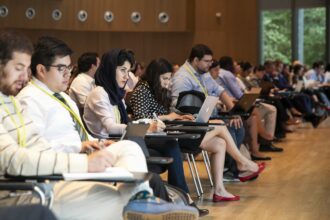
The well-known summer courses of the Hague Academy, which have been organised from the very outset, take place over a period of six weeks: three weeks of public international law (in July) and three weeks of private international law (from the end of July until mid-August). Over a period of almost eighty years, thousands of students have been able to attend them. These students, who have come from all over the world, representing between sixty and eighty nationalities each year, and many of whom have subsequently become well-known in the academic world, in research, or in diplomacy, have thus had the opportunity to meet "great names" of international law and to attend courses of a very high level. The "summer courses" also provide an opportunity, in the city which has become the "Capital of international law", to have contacts with the International Court of Justice, the international criminal courts, the Iran-U.S. Claims Tribunal, the Bureau of the Permanent Court of Arbitration, the Conference on Private International Law, and other institutions. The Secretariat General of the Academy and the Association of Attenders and Alumni of the Academy (AAA) organise these meetings.
The Centre for Research is open, for one month from mid-August, to persons undertaking high-level research, working under the direction of professors who are highly qualified in the particular subject being studied, with the best results of the work being published in the Academy's prestigious collection.
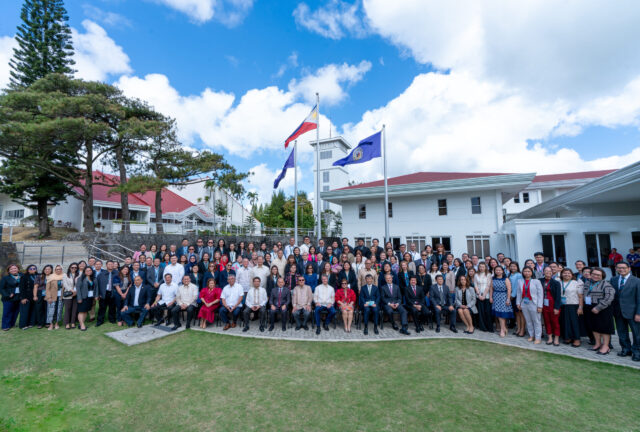
As regards adapting to new needs, the external programme, which was established in the 1960s, has met the expectations of recently decolonised countries, by taking training programmes to those countries. Thus, more than thirty programmes, each lasting two weeks, have been organized in various African, Latin American and Asian countries. Now, at the beginning of the 21st century, and given the new geopolitical circumstances, the Academy will turn its attention to Central and Eastern Europe and also to Asia (including the new States of Central Asia), with a view to promoting knowledge of international law and its developments, in order to contribute to the establishment of peace.
The Academy is an original Institution: it is not a University, nor does it work in the same way. It does not have a permanent teaching staff, but its scientific body, the Curatorium, freely calls upon academics, practitioners, diplomats, and other personalities from all over the world whom it considers qualified to give courses, in English or French (with simultaneous interpretation). These courses are given in the form of a series of lectures, on general or special subjects. As a result, the students are always assured of hearing from one of the foremost specialists on each subject. In principle, the courses are then published in the Collected Courses of the Academy of International Law, which now run to more than 300 volumes and are certainly the most important encyclopaedic publication on private and public international law.